
Solutions / Observability
Control telemetry before the observability backend does.
Shape logs, metrics, traces and events upstream. Reduce noise, apply transformations and route different signals to the systems that need them.
Signals
More telemetry shouldn't require more pipeline sprawl.
Four signal classes, shaped upstream instead of at every backend.
Logs
structured and unstructured records, filtered and normalized before they reach an index.
Metrics
time-series data, shaped and routed to the systems tracking it.
Traces
distributed request paths, kept intact through transformation.
Events
discrete occurrences, enriched and classified upstream.
Routing
Decide what each destination actually needs.
Not every backend needs every signal at full volume — shape and route each one independently.
Illustrative architecture
Signals
- Logs
- Metrics
- Traces
- Events
LYFTDATA
Telemetry control layer
- Collect
- Transform
- Route
- Govern
- Observe
Shape and route each signal independently, before any backend consumes it.
Shaped
Metrics backend
Filtered
Log index
Sampled
Tracing backend
Full fidelity
Archive
Logs, metrics, traces and events converge into one LyftData control layer that shapes and routes each signal. Governed output can reach a metrics backend, a log index, a tracing backend, and a low-cost archive, each getting only the signal and volume it needs.
LyftData controls how telemetry reaches these systems — it doesn't replace their dashboards, alerting or analysis features.
Tool mobility
Your telemetry layer should survive a backend change.
Collection and shaping stay fixed upstream — swapping or adding an observability backend is a routing change, not a re-instrumentation project.
Keep the signals. Lose the sprawl.
Product proof
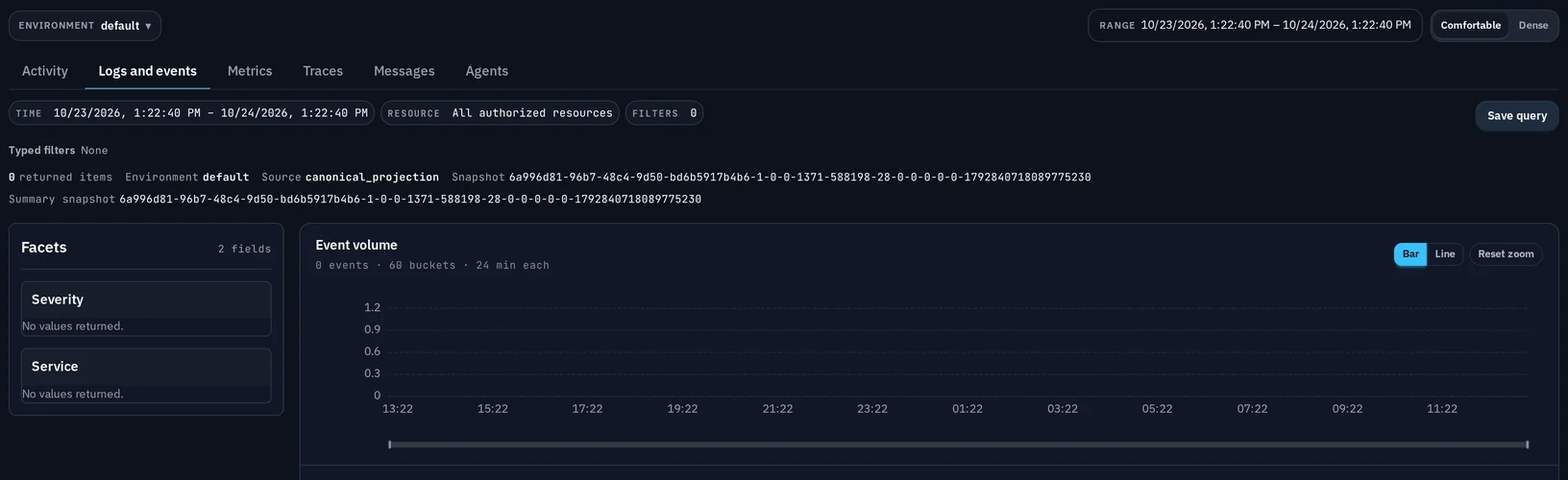
Observe the system moving the telemetry, too.
The same control layer reports its own health — a bounded telemetry interface, not a black box.
Why LyftData
Independent
the observability backend consumes shaped telemetry — it doesn't dictate the collection architecture.
Governed
noise reduction and transformation rules apply once, before signals fan out to multiple tools.
Reusable
the same telemetry layer keeps working when a backend changes — you're not re-instrumenting sources.
Shape telemetry once. Route it everywhere it needs to go.
Start with LyftData, or walk through your observability stack with the team.