
Enterprise / Deployment
Run the control layer where the data lives.
Deploy LyftData across the environments producing your data while keeping workflow control, policy and operational visibility centralized.
Central control. Distributed execution.
Illustrative architecture
LYFTDATA
Server · central control plane
- Workflows
- Policy
- Scheduling
- Visibility
Worker
Cloud
in-region, next to managed services
Worker
Private · VPC
inside your own network boundary
Worker
On-prem
in your data center
Worker
Edge
close to where data is produced
One central LyftData Server acts as the control plane. Workers branch out from it to execute pipelines in the environments where the data already lives — cloud, private VPC, on-premises and edge — while workflow control, policy and visibility stay centralized on the Server.
Architecture
Move the execution, not necessarily the data.
Workers execute in the environments you place them — source-side, in a VPC, on-prem, at the edge — instead of requiring every stream to traverse a centralized hop before it's processed.
Placement
Put processing where it makes sense.
Source proximity
run collection close to where the data is already produced.
Sensitive boundaries
keep processing of sensitive data inside the environment it belongs to.
Heavy processing
place compute-intensive stages on the Worker pool built for them.
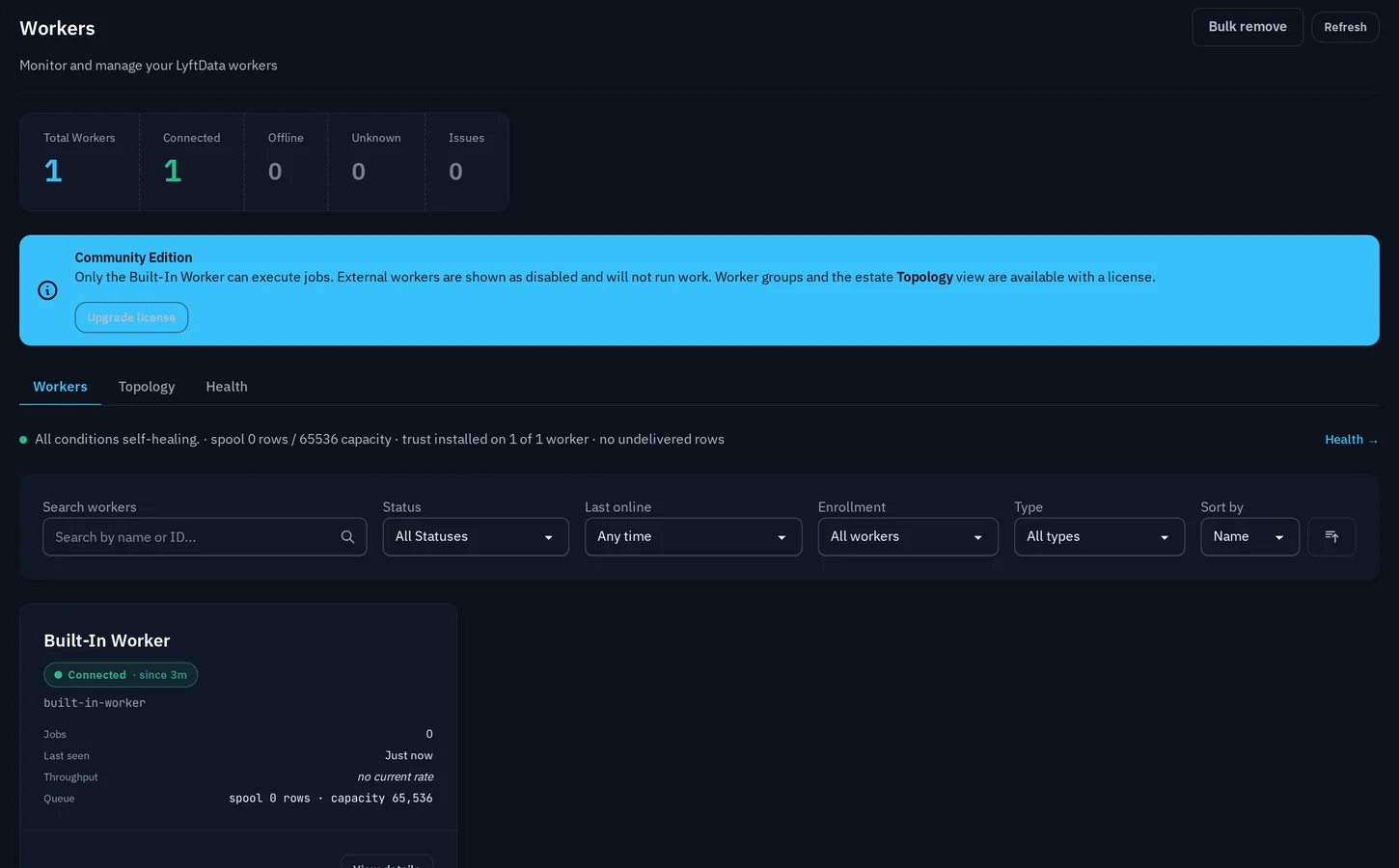
Workers
Scale execution independently.
Each Worker connects, reports health and runs the jobs placed on it — visible from the same operational surface as everything else.
Sovereignty
Keep data inside the boundaries that matter.
Process sensitive data in the environment it's required to stay in, and route only the approved output across the boundary.
Required environment
Processes in place
Worker
A dashed boundary represents a required environment. Inside it, a Worker processes sensitive data. Only one labeled, approved output crosses the boundary outward; the sensitive data itself does not leave.
This describes an architectural pattern, not a specific legal or regulatory certification.
Operations
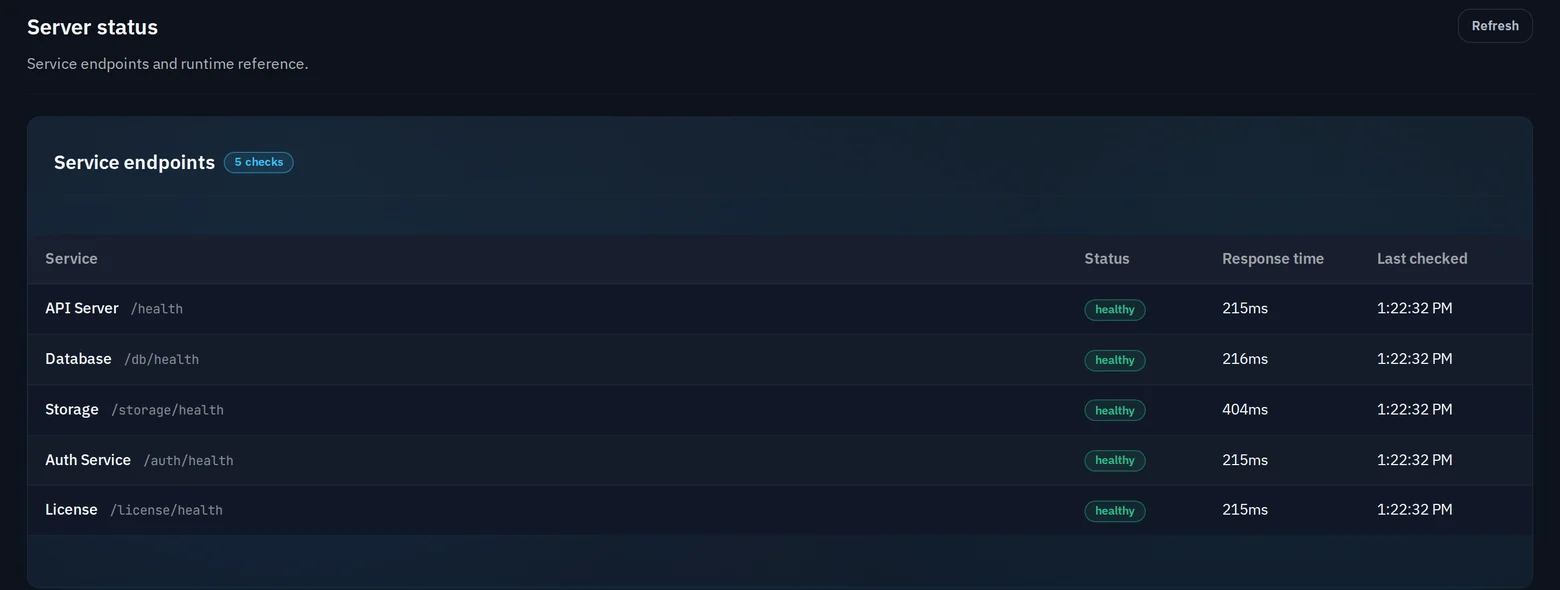
Know what is running and whether it is healthy.
Server Status reports the health of every service endpoint.
Change control
Production infrastructure should have explicit state.
The same versioning, planning and rollback discipline that governs a pipeline change governs where and how it runs.
See how change control works →Deployment models
One control model. Different environments.
Worker
Cloud
in-region, next to managed services
Worker
Private · VPC
inside your own network boundary
Worker
On-prem
in your data center
Worker
Edge
close to where data is produced
Central control. Distributed execution.
Show us where your data lives.
We'll map how LyftData can fit around the infrastructure, boundaries and destinations you already have.